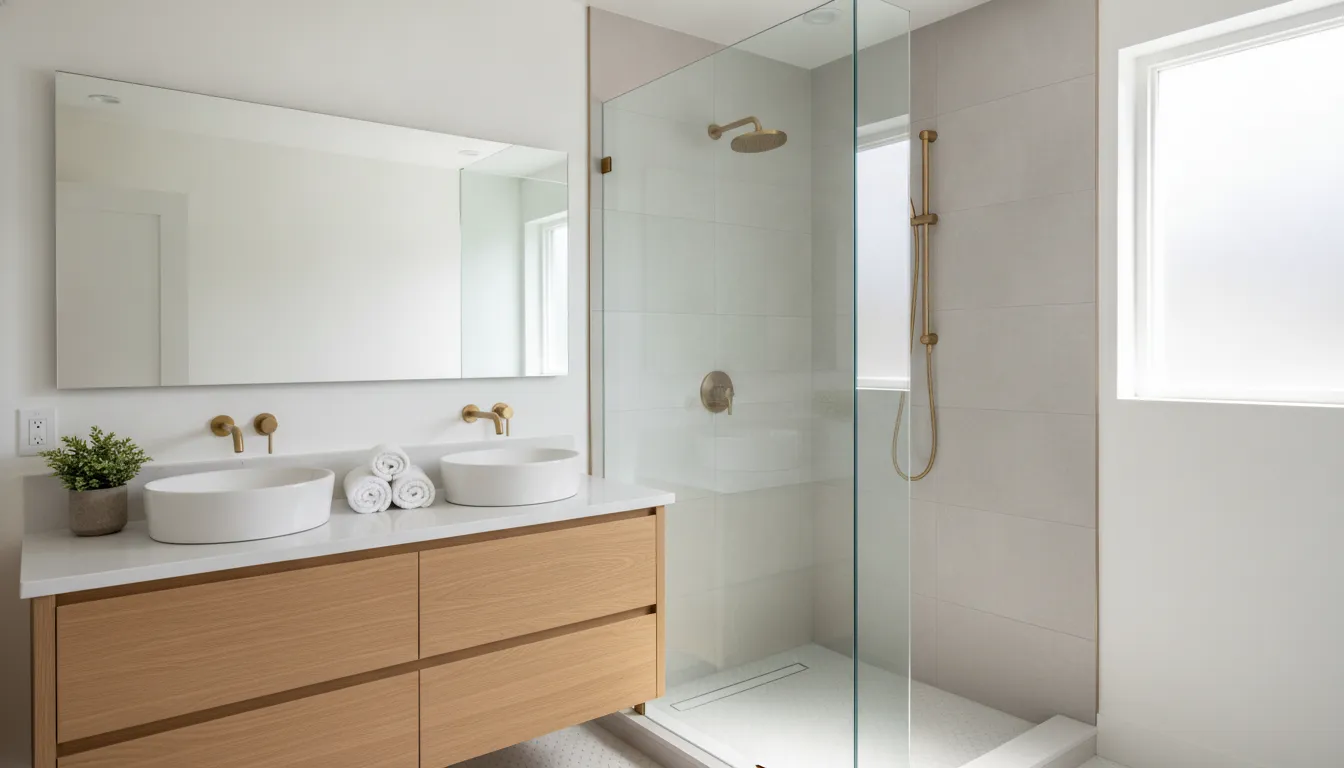
Bay Area bathroom remodeling permits are decided by the city or county that issued your address, not by a single regional rule. A same-size fixture swap can be a simple online permit in one city and a planning review in the next. Moving a wall or adding a shower almost always changes the path. This guide is a homeowner checklist for confirming the jurisdiction, sorting the scope, and coordinating the contractor who pulls and closes the permit. It is not legal advice, and it does not replace a current reading of your building department's page.
What Bay Area bathroom remodeling permits depend on
Two questions decide most of the permit path. First, who has building authority for the property. Second, what the work actually changes. Homeowners often start with the second question and guess the first from a mailing address. In the Bay Area that guess is expensive. Oakland, San Francisco, and San Jose each publish their own bathroom rules. Unincorporated pockets of Alameda, Contra Costa, San Mateo, Santa Clara, and Marin counties are reviewed by the county, not the neighboring city.
Confirm the jurisdiction before you describe the work
Look up the parcel on the city or county property map, then match that result to the building department that accepts permits for it. A San Jose mailing address can still sit in unincorporated Santa Clara County. An Oakland neighborhood address is not a substitute for the City of Oakland permit portal. Write down the department name, the portal, and the page that describes kitchen and bathroom work. That note is what you hand a contractor so two people are not applying in different systems.
If the map and the permit portal disagree, call the department before anyone orders tile. Realm Living advisors see this mix-up on calls when a homeowner has already collected bids written to the wrong city's process. Correcting it later means redrawing the scope and, sometimes, withdrawing an application.
Separate cosmetic work from work that changes systems
Painting, cabinet resurfacing, new flooring, and a countertop that does not move plumbing are the items cities most often treat as cosmetic. San Jose says those surface changes do not need a permit. The moment the project replaces a toilet, relocates a sink, adds a circuit, or opens a wall, you are in a different category. Do not let a contractor fold the system work into a "cosmetic refresh" so the bid looks simpler. The inspection record is what a future buyer and insurer will look for.
How San Francisco, Oakland, and San Jose differ
These three cities cover a large share of Bay Area bathroom projects, and their published rules do not match. Read the page for your city, then ask the department if your scope still fits the path you think it does. Rules and fee schedules change, so treat the notes below as a map, not a quote.
| Question to verify | San Francisco | Oakland | San Jose |
|---|---|---|---|
| Where to start | DBI via PermitSF for eligible kitchen and bath work. | Online Permit Center. Planning reviews first. | SJPermits.org Application Wizard. |
| What the city says about bathroom remodels | A permit is required before fixture work. See Building Code section 106A.2 for exemptions. | A building permit is required for any bathroom remodel before construction starts. | Cosmetic work needs no permit. New plumbing or electrical work does. |
| When the path gets heavier | Moving walls, work that needs plans, or legalizing an unpermitted bath. | Layout changes, a larger envelope, or a building that is not a house or duplex. | Moving walls or windows, reframing, or relocating fixtures. |
| Who should apply | The owner or a licensed B contractor. Electrical and plumbing permits can be separate. | A licensed contractor with a business tax certificate, or the owner. | A licensed contractor is recommended. The signer owns the permit. |
Use the table to build questions, not to file. Open San Francisco's kitchen and bath page, Oakland's bathroom and kitchen remodel page, and San Jose's minor remodel page while you are on the phone with the department.
San Francisco fixture work still needs a permit.
San Francisco's Department of Building Inspection says you need a permit before renovating and replacing kitchen or bath fixtures. And it points readers to exemptions in San Francisco Building Code section 106A.2. The online kitchen or bath permit is only for in-kind work that does not remove or move walls and does not require plans. The building has to be an R-3 house or a unit in an R-2 apartment building, and the kitchen or bath has to already be legally permitted.
DBI also publishes minimum valuations on its cost schedule, listed on that page as $20,552 per bathroom and $24,663 per kitchen. Those figures are valuation floors the department uses, not a construction budget and not a permit fee. If the project moves walls, needs plans, or is meant to legalize an unpermitted bathroom. The city routes you to an over-the-counter permit with plans or to in-house review. Confirm the current valuation and the correct desk before you promise a start date.
Oakland planning review comes first.
Oakland states that a building permit is required for any kitchen or bathroom remodel and that the application starts with the Bureau of Planning. The city then splits the paperwork by scope. One path has no window or wall changes. Another is a same-size window replacement. A third changes walls or windows but is exempt from design review. The last needs Small Project Design Review. Expanding the building envelope, or changing windows and doors so they no longer match, is what pushes a project into design review.
For a house or duplex, trade work can ride with the building permit. Oakland says that if the remodel is not a house or duplex, separate mechanical, electrical, and plumbing permits are also required. After approval, the city requires a Waste Reduction and Recycling Plan, and some older homes need a lead-based paint work plan. Ask which of those applies before demolition, because both can hold up the permit even when the fixtures are already on site.
San Jose minor and major permits are different.
San Jose defines a minor kitchen or bathroom remodel as multiple fixture and appliance replacements that involve new electrical. Plumbing, or mechanical work, without changing how many fixtures there are or where they sit. No structural changes are allowed. Cosmetic work such as painting, cabinet resurfacing, flooring, and countertops does not require a permit. A major remodel, which changes walls or windows, modifies framing, or relocates or adds fixtures, goes through the additions and remodels process instead.
Minor work may qualify for an online permit at SJPermits.org. The city recommends a licensed contractor as the applicant and warns that whoever signs is responsible for everything done under that permit. Its own blog is blunt about a common failure: if an inspector finds structural work on a minor-remodel permit. You have to submit plans and start the major-remodel review. That is the expensive version of a common surprise: the shower moves after the permit is issued.
Scope questions that change the permit path
Write the scope as a list of changes, not as a style. A phrase like primary bath refresh tells a reviewer nothing. A line that says the toilet and vanity stay put, the tub stays, and no wall changes tells them which form to open. Walk the room with that list before you request bids, and mark anything you are still deciding.
Fixtures, drains, and ventilation
Replacing a toilet, sink, or tub in the same place is still plumbing work. San Jose treats that kind of replacement, when it includes new plumbing, as a minor remodel that needs a permit and an inspection. San Francisco's online bath permit exists specifically for renovating or replacing fixtures in kind. Oakland requires a building permit for the remodel itself. A new shower where a tub used to be, a moved toilet, or a second sink is a layout change in every one of these cities.
Ventilation is its own line item. San Jose requires bathrooms with a tub or shower to be mechanically ventilated and ducted outside. A window is not an acceptable substitute for humidity control on that city's minor-remodel sheet, and the fan has to meet the stated airflow and energy rating. If your contractor plans to reuse an old ceiling fan that dumps into the attic. Put that in writing as a question for the building department before demo day.
Walls, windows, and the building envelope
Opening a non-bearing wall to widen a doorway can still trigger plans, even when nobody calls it an addition. San Francisco limits the no-plan online permit to work that does not remove or move walls. Oakland separates "no layout change" from "wall or window change," and a window that gets larger, or that no longer matches the existing pattern, can require design review. San Jose moves any wall, window, or framing change out of the minor permit and into a major remodel.
If the bathroom work is really a small addition, such as stealing space from a closet by moving an exterior wall, stop and treat it as an addition. The permit, the plans, and the review desk all change. The Bay Area bathroom planning guide covers how to frame that larger scope with a contractor. This page stays on the permit check.
Electrical, older homes, and multi-unit buildings
A new circuit for a heated floor, a relocated vanity light, or a fan on its own switch is electrical work. San Francisco lets the bath permit applicant be the owner or a licensed B contractor, and says related electrical and plumbing can be applied for by others. Ask whether your project needs those companion permits or whether they are noted on the bath application. Oakland requires separate mechanical, electrical, and plumbing permits when the remodel is not in a house or duplex, which matters for flats, condo buildings, and larger apartments.
Older Bay Area houses add two practical checks. First, ask the department whether a lead-safe work plan is required before disturbing painted surfaces. Oakland calls this out on its remodel page. Second, ask whether smoke and carbon monoxide alarms have to be shown at inspection even though you did not touch the bedrooms. San Jose's minor-remodel inspection notes tell applicants to be ready to show alarms in sleeping rooms and outside sleeping areas. Neither item is a design choice. Both can fail a final.
What to gather before you apply
A complete packet is mostly facts about the building, not a mood board. Collect them once and reuse them for every bidder and for the application.
A scope sheet the reviewer can follow
- The property address as it appears on the assessor record, plus the parcel number if you have it.
- Occupancy and building type, such as a single-family house, a duplex, or a unit in a larger building, and how many stories it has.
- Which bathroom, on which floor, and whether that bathroom was part of the original permitted building.
- A plain list of what is replaced in place, what moves, and what is added, including plumbing, electrical, mechanical, and any wall or window work.
- Whether the project touches the exterior, the roofline, or the building envelope.
San Francisco's online application asks for construction type, occupancy, and existing use. It also asks for the number of stories, which floors the work is on. How many kitchens or baths are included, and whether electrical or plumbing work is part of the job. Build your sheet to answer those questions even if you live in another city. The same facts are what a plan checker in Oakland or San Jose will ask for in a different form.
Valuation, fees, and who pays the city
Permit fees are not the construction price, and they are often paid to the city rather than wrapped into a contractor's bid. San Francisco tells applicants to estimate the value of the work, including materials and labor. And points them to separate fee schedules for the building permit, electrical work, and plumbing work. Use the city's current schedule when you ask for a number. Do not copy a fee from a blog, including this one.
For a Bay Area budget that already includes construction, keep the permit line as its own allowance until the department calculates it. The cost guide for a Bay Area bathroom remodel is the right place to pressure-test the construction number. The city-by-city permit fee breakdown explains why those city charges vary and why they surprise people who only compared contractor bids. Neither page can tell you what your application will be charged next month.
How to coordinate the contractor and the inspections
The person who signs the application owns the result. Homeowners skip this when they assume the contractor handles permits, without writing down which license, which city account, and which inspections.
Decide who pulls the permit
San Jose recommends that a licensed contractor apply and warns owner-applicants to read the state's owner-builder guidance before they sign. The Contractors State License Board tells owner-builders they are the ones who obtain the permit, schedule workers, call for inspections, and correct anything that fails. Owner-builder status is also limited. For home improvement work, CSLB says the site has to be your principal residence. The work has to happen before a sale. You also cannot use the exemption on more than two structures in any three-year period.
Oakland allows either a properly licensed contractor, with a current city business tax certificate, or the owner. San Francisco allows the owner or a licensed B contractor on the kitchen or bath permit. If an advisor or a consultant offers to pull the permit for you without a license, treat that as a stop. CSLB says anyone who bids the work or supervises the hiring of subcontractors has to be licensed. Ask for the license number, confirm it on the CSLB site, and make sure the classification matches the work.
Put the permit duty in the contract in one sentence: who applies, in which jurisdiction, before which work starts, and who schedules inspections. If you want a managed team rather than an owner-builder path. Realm Living matches homeowners with vetted contractors and keeps the scope, the permit questions, and the inspection list in one place. The how it works page shows that sequence. For a South Bay project, the San Jose contractor guide covers how to compare the people who would actually sign the application.
Plan the inspection stops before demo
San Jose issues a permit card that lists the required inspections and says the card has to be on site for the inspector. Rough inspections typically happen while the walls are open, so the tub or shower pan, the drain, and the electrical can be seen. A final comes after fixtures, the fan, and the finishes are in. Covering a shower pan before the rough inspection is a classic do-over. Ask the contractor which inspections your specific permit card lists. Do not accept a promise to figure it out later as the schedule.
Leave access. San Jose tells applicants to have plans and manufacturer instructions available and to provide a ladder if the inspector needs one. If the property is in a floodplain, be ready to show how the wall finish meets that requirement. These are city inspection notes, not a full code book. The installer still has to follow the adopted codes.
Keep the approved plans, the permit card, and the inspection sign-offs with the house records. That file is what you will need if you refinance, sell, or later legalize a different piece of work. If a previous owner already finished a bathroom with no permit, do not bury it inside the new scope. San Francisco sends legalization of an unpermitted kitchen or bath down a different path than an ordinary fixture replacement. Say so at the first meeting.
A practical order of work
Use this order so the permit conversation happens before materials are booked. It is a homeowner sequence, not a substitute for the city's instructions.
- Confirm the jurisdiction from the parcel, and save the building department page that matches the address.
- Write a scope sheet that separates in-place replacement, relocated fixtures, new circuits or fans, and any wall or window change.
- Ask the department, in writing if the portal allows it, which application that scope uses and whether planning or design review comes first.
- Choose who signs the application, confirm the license, and put that duty in the contract before demolition.
- Apply, pay the city directly if that is how the jurisdiction bills, and post the permit card before work starts.
- Book rough inspections before walls or the shower pan are covered, then book the final and save the sign-off.
If step 3 comes back as a major remodel, or as a project that needs design review, pause the order and update the bids. A price written for a minor online permit does not cover plans, a structural detail, or a second review cycle. The bathroom remodel checklist is a useful companion for the non-permit decisions, as long as you keep the jurisdiction check in front of it.
Neighboring cities and the counties are not covered by the three examples above. Berkeley, Daly City, Fremont, Santa Clara, and the unincorporated county areas each publish their own triggers. If your address is outside San Francisco, Oakland, and San Jose, repeat the same questions on that department's site. Ask what is cosmetic, what needs a building permit, when a trade permit is separate, and which layout change forces plans. Bring the written answer to the contractor. Do not assume the San Jose minor-remodel definition applies one city over.
What this guide will not decide for you
No article can tell you that your bathroom is exempt. Exemptions live in the local code, they are narrow, and they change. San Francisco points to section 106A.2. San Jose carves cosmetic work out and still permits minor remodels that include new plumbing or electrical. Oakland requires a building permit for bathroom remodels and then sorts the review by how much the layout changes. Your job is to match your scope to the current local page and to get the department's confirmation before anyone opens a wall.
This is also the wrong page for a construction budget, a statewide list of every project that needs a permit, or a description of penalties. Those topics have their own Realm Living guides, linked below, so this one can stay on the Bay Area verification workflow. If you want help turning the scope sheet into a contractor search, start with the intake form and an advisor will walk the project with you.
Frequently asked questions
Do I need a permit to remodel a bathroom in the Bay Area.
Often yes, and the answer depends on the city or county and on the scope. San Francisco requires a permit before you renovate or replace bath fixtures, with limited exemptions in its building code. Oakland requires a building permit for any bathroom remodel. San Jose does not require a permit for cosmetic work such as paint, flooring, and countertops. It does require one for a minor remodel that includes new plumbing, electrical, or mechanical work. Confirm your address and your scope with the local department.
Who issues the permit if I live in an unincorporated area.
The county, not the nearest city. A mailing address that says San Jose, Oakland, or a smaller town can still be unincorporated county land. Check the parcel on the assessor or permit map and apply with the department that actually has authority. Using the wrong portal is a common reason an application sits untouched.
Can I pull the bathroom permit myself.
Sometimes. San Francisco and Oakland allow an owner to apply, and San Jose allows applicants other than contractors while recommending a licensed contractor. If you sign as an owner-builder, the Contractors State License Board says you take on the permit, the inspections, the employment rules, and the corrections if work fails. Confirm that you qualify before you choose that path, and do not let an unlicensed consultant sign or supervise the job.
What is the difference between a minor and a major bathroom remodel in San Jose.
San Jose calls it minor when you replace fixtures and do new electrical, plumbing, or mechanical work without moving those fixtures or changing walls, windows, or framing. It becomes major if you reconfigure walls or windows, modify framing, or relocate or add fixtures. A minor online permit cannot be stretched to cover structural work. If the inspector finds that the work went beyond the permit, the city requires plans and a major-remodel review.
How should I handle an older bathroom that was never permitted.
Tell the department before you design the new project around it. San Francisco treats legalizing an unpermitted bath differently from remodeling one that was legally permitted, and the online in-kind permit is not the path for legalization. Hiding the old work inside a fixture swap can fail at inspection and force a second application. Ask what documentation the city wants, then write that into the contractor's scope.
Get a permit plan before the demo starts
A bathroom remodel moves faster when the jurisdiction, the scope, and the person signing the permit are settled first. Realm Living helps Bay Area homeowners turn that check into a clear project and a vetted contractor, without asking you to become the permit clerk.
Related reading stays on separate questions. See which renovations typically need a permit. See planning a Bay Area bathroom remodel. See budgeting a Bay Area bathroom remodel. See how permit fees differ by city. See California renovation permits at a glance.