How Much Does it Cost to Build a Deck? A Detailed Guide
Get a clear breakdown of the cost to build a deck, including materials, labor, permits, and design choices, so you can plan your project with confidence.
|
January 16, 2026
In this article:
A new deck is more than just an outdoor space; it's an investment in your home and your lifestyle. It adds real value, creating a perfect spot for everything from quiet mornings to lively gatherings with friends.
But before you get to the fun part, you need a solid financial plan.
Understanding the true cost to build a deck is the first step. This guide breaks down all the variables that influence your budget—materials, labor, design, and even your location. We’ll help you see how to make smart choices that protect your investment and deliver a beautiful return for years to come.
Key Takeaways
- Look Beyond Material Costs: Your final price tag is a mix of materials, labor, permits, and design complexity. Professional installation is often the largest single expense, so creating a detailed plan from the start is the best way to prevent unexpected costs.
- Weigh Upfront Price vs. Future Maintenance: While pressure-treated wood is cheaper to install, composite decking can save you significant time and money on long-term upkeep. Your material choice should fit both your initial budget and how much maintenance you're willing to perform later.
- Control Your Budget with Smart Planning: You can effectively lower your project's cost by sticking to a simple, rectangular design, scheduling the build for the off-season, and comparing at least three detailed quotes from professional contractors.
What Does a Deck Really Cost?
Figuring out the budget for a new deck can feel like trying to hit a moving target. The final price tag depends on a mix of factors, including the size of your deck, the materials you choose, the complexity of the design, and even your zip code.
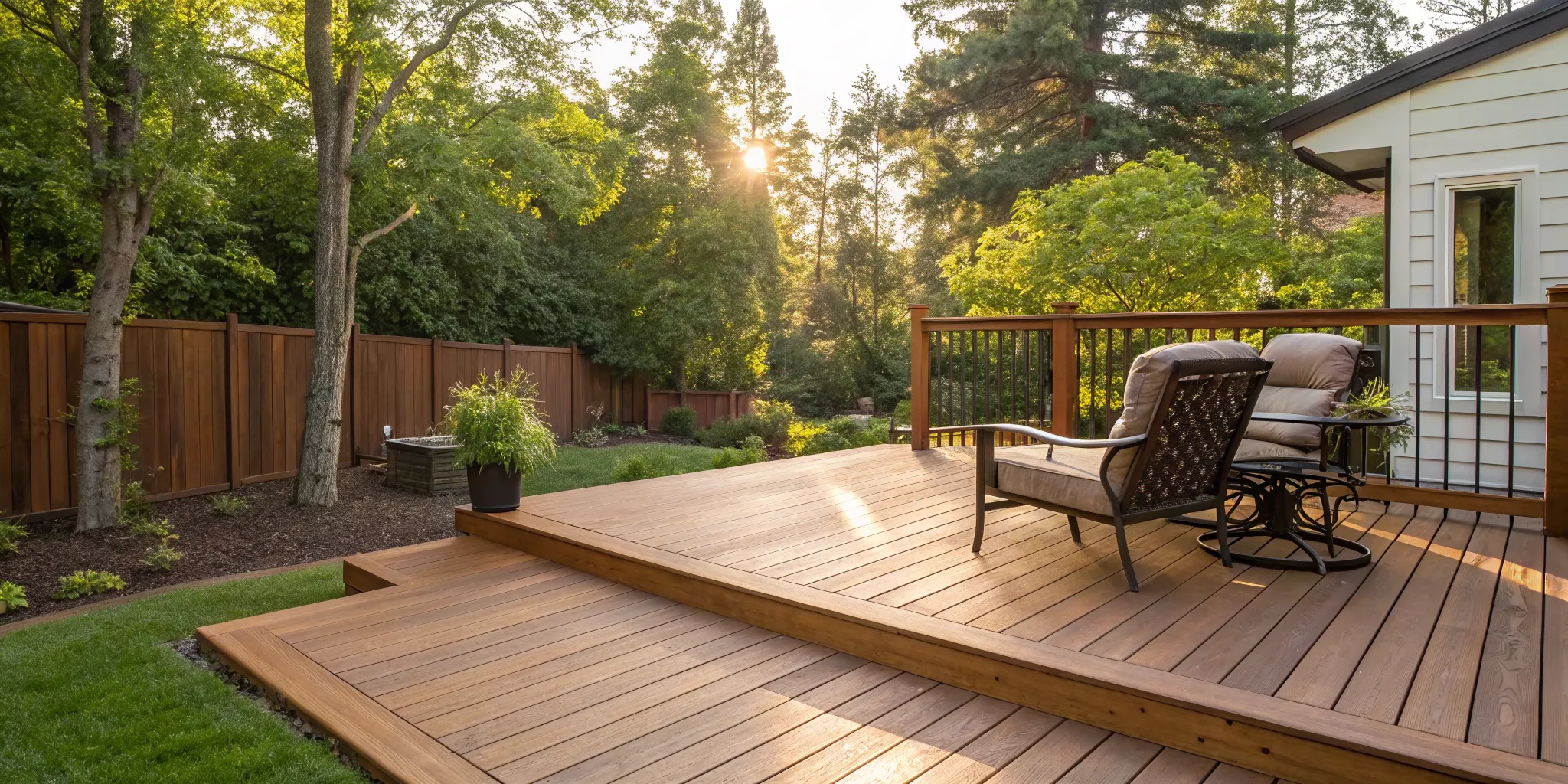
A simple, ground-level platform will cost significantly less than a multi-level masterpiece with built-in seating and custom railings.
Think of your total cost as a combination of four key elements: materials, labor, permits, and design features.
While it’s tempting to focus only on the price of lumber or composite boards, professional labor often makes up the largest chunk of the budget. That’s why getting a clear, detailed estimate is so important.
At Realm, we help you create a realistic budget from the start, so you can plan your project with confidence and avoid surprises down the road.
We’ll break down each of these cost factors to give you a clearer picture of what to expect.
Cost by Deck Size
The most straightforward factor in your deck’s cost is its size. A larger deck requires more materials and more labor, which naturally increases the price.
To give you a general idea, a small 10'x10' deck might cost between $3,000 and $6,500. For a more common 14'x20' size, you can expect a range of $8,500 to $17,000. If you have the space for a large 20'x20' deck, perfect for entertaining, your budget could be anywhere from $16,000 to $24,000.
These are just starting points, of course—your material choices and design complexity will cause these numbers to shift.
Breaking Down Labor and Installation
Don’t underestimate the cost of professional installation. Labor can account for 50% to 70% of your total project cost, as you’re paying for the skill, experience, and efficiency of a professional crew.
On average, you can expect to pay between $30 and $60 per square foot for labor alone. This rate covers everything from site preparation and foundation work to framing and finishing.
Hiring a pro ensures your deck is built safely and to code, which is why it’s crucial to work with vetted, reliable contractors. Keep in mind that labor costs can also fluctuate based on seasonal demand; contractors are often busier in the spring and summer, which can impact pricing.
Comparing Deck Material Costs
The materials you choose will have a major impact on both your upfront cost and long-term maintenance. Pressure-treated wood is the most budget-friendly option, typically running $3 to $6 per square foot.
For a step up, premium woods like cedar or redwood offer natural beauty and durability. If you’re looking for a low-maintenance solution, composite decking is a popular choice, costing between $5 and $14 per square foot.
At the high end, exotic hardwoods like Ipe or Tigerwood are incredibly durable and beautiful, but they come with a premium price tag of $10 to $20 per square foot.
Permit and Planning Fees
Before any work begins, you’ll likely need a building permit from your local municipality. This is a critical step that ensures your deck is structurally sound and meets all safety regulations.
The cost of a permit can vary widely depending on your location and the scope of your project, ranging from a few hundred to a few thousand dollars.
While it might seem like just another fee, securing the proper permits protects your investment and prevents potential legal headaches or issues when you eventually sell your home. Your contractor can typically handle the permitting process for you, but it’s an expense you’ll need to factor into your overall budget.
How Location Affects Your Budget
Where you live plays a surprisingly large role in how much your deck will cost. Labor rates and material prices can differ significantly from one city to another.
Homeowners in areas with a higher cost of living, like the San Francisco Bay Area or Seattle, can expect to pay more for construction projects than those in other parts of the country. This is due to higher wages for skilled labor, regional supply chain costs, and stricter local building codes.
When getting quotes, remember that a price that seems high in one area might be standard in another. That’s why getting multiple, localized estimates is key to understanding the true cost in your market.
Decking Material and Installation Guide
Material Comparison
- Pressure-Treated Wood: The most affordable option ($15–$25 per sq. ft. installed).
- Composite (Trex/Aztek): Higher upfront cost ($35–$60 per sq. ft.) but requires zero staining and lasts 25+ years.
Installation Factors
The height of the deck significantly impacts price. A ground-level deck does not require railings (in many jurisdictions) or heavy structural bracing, whereas a second-story deck requires deeper footings and stairs, adding roughly $3,000–$5,000 to the labor cost.
Choose the Right Deck Materials
Choosing your deck material is one of the most important decisions you'll make. It directly influences your project's initial cost, long-term maintenance, and overall look.
While it’s tempting to go with the cheapest option, it’s worth thinking about the time and money you’ll spend on upkeep down the road.
Let’s break down the most common choices so you can find the perfect fit for your home and lifestyle.
Pressure-Treated Wood
If budget is your top priority, pressure-treated wood is your go-to.
Typically costing between $3 to $6 per square foot, it’s the most affordable material on the market. This type of lumber is chemically treated to resist rot and insects, giving it a longer lifespan than untreated wood.
The trade-off for the low price is the required maintenance. To keep it looking great and prevent splintering or warping, you’ll need to clean, stain, and seal your deck every couple of years.
It’s a solid, classic choice, as long as you’re prepared for the regular upkeep.
Cedar and Premium Woods
For a beautiful, natural look, many homeowners turn to cedar or redwood. These premium woods have a rich color and contain natural oils that make them resistant to decay and bugs.
Cedar generally runs from $4 to $8 per square foot, while redwood is a bit pricier at $7 to $12 per square foot.
While they have some built-in defenses against the elements, they aren’t maintenance-free. Like pressure-treated wood, they require regular cleaning and sealing to maintain their color and protect the wood from weathering.
If you love the authentic appearance of real wood, these are fantastic options.
Composite and PVC Options
If you want the look of wood without the constant maintenance, composite decking is an excellent choice. Made from a blend of wood fibers and recycled plastic, materials like Trex are designed to withstand the elements without rotting, warping, or splintering.
The upfront cost is higher, ranging from $5 to $14 per square foot, but you’ll save on long-term upkeep.
For an even more durable and completely maintenance-free option, there’s PVC decking. It’s the most expensive, at $15 to $25 per square foot, but it offers a high-end look and requires nothing more than an occasional wash.
You can explore a detailed comparison of decking materials to see which fits your needs.
Consider the Long-Term Costs
When budgeting for your deck, think beyond the initial price tag. A new deck can be a great investment, often adding significant value to your home.
While pressure-treated wood is the cheapest to install, the costs of staining and sealing every few years can add up. A composite deck might cost more upfront, but its minimal maintenance needs can make it more cost-effective over its lifespan.
A Realm advisor can help you analyze these long-term costs, ensuring you make a choice that works for your budget now and in the future.
Understand Maintenance Needs
Your material choice directly impacts your future to-do list.
A wood deck will require your attention every two to three years. This involves a thorough cleaning to remove any mildew or grime, followed by a fresh coat of stain or sealant to protect it from sun and moisture. In contrast, composite and PVC decking are much simpler to care for.
A simple cleaning with soap and water once or twice a year is usually all that’s needed to keep them looking new.
If you’d rather spend your weekends enjoying your deck than working on it, a low-maintenance material is definitely the way to go.
How Design Choices Affect Your Budget
Your deck’s design is where your vision comes to life, but it’s also where costs can quickly add up.
A simple, single-level square deck will always be the most budget-friendly option. As you add complexity, from curves and multiple levels to built-in features, both material and labor costs will rise.
Thinking through these choices ahead of time helps you create a realistic budget and a space you’ll love without any financial surprises.
Let's look at how specific design elements can impact your final price tag.
Preparing Your Site
Before any building can begin, your site needs to be ready. If your yard is sloped or uneven, your contractor will need to level the area, which adds to labor costs. The height of your deck also plays a big role.
A low-to-the-ground deck requires a simpler foundation, while a deck that’s elevated several feet off the ground needs deeper footings and more structural support for safety and stability.
A complex site with difficult access or poor soil conditions can also increase the work required, so it’s a key factor to discuss during your initial project planning.
The Cost of Complex Features
Intricate designs are beautiful, but they come at a premium.
Anything beyond a standard rectangular shape—like curves, octagons, or unique patterns in the decking—requires more precise cuts and creates more material waste. This drives up both labor and material costs.
Custom features like built-in benches, planters, or privacy screens also add to the bottom line. Each custom element requires extra design work, materials, and installation time.
If you're trying to manage your budget, sticking to a simpler, more streamlined design is one of the most effective ways to keep costs in check.
Budgeting for a Multi-Level Deck
A multi-level deck is a fantastic way to define different outdoor "rooms," like a dining area and a separate lounge space.
However, building multiple levels is more involved than simply expanding a single-level deck. Each level requires its own structural framing, support posts, and often, sets of stairs connecting them. This complexity increases both material needs and labor hours significantly.
For perspective, while a basic deck might cost under $10,000, a larger 20'x20' deck with more complexity could easily range from $16,000 to $24,000 or more, depending on the design and materials.
Adding Railings and Stairs
If your deck is more than a certain height off the ground (usually 30 inches), building codes will require railings for safety.
The cost of railings varies dramatically based on the material you choose.
Simple pressure-treated wood is the most affordable, while composite, aluminum, cable, or glass railings can be much more expensive.
Stairs are another necessary component for elevated or multi-level decks. You can expect to pay between $25 and $50 per step, so a short flight of 8 steps could add around $200 to $400 to your project just for the stairs themselves.
Factoring in Built-in Elements
Beyond the deck itself, think about any extra features you want to include. Popular add-ons like a pergola for shade, an outdoor kitchen, or a reinforced area for a hot tub will significantly increase your budget. These features often require specialized work from vetted professionals like electricians or plumbers.
Don't forget to account for other potential costs, such as the demolition and removal of an old deck, which can add several hundred to a few thousand dollars to the project.
Factoring these elements in from the start ensures your budget is comprehensive and realistic.
Save Money on Your Deck Project
A beautiful new deck doesn't have to break the bank. With some smart planning and strategic decisions, you can manage your budget effectively without sacrificing quality.
From choosing the right materials to timing your project perfectly, here are some practical ways to save money on your new outdoor space.
Select Materials Strategically
The materials you choose have the biggest impact on your budget, both now and in the future. While pressure-treated wood is often the cheapest option upfront, it requires regular staining and sealing to prevent rot and wear.
On the other hand, composite decking costs more initially but pays off over time. Because composite boards are so durable and low-maintenance, you’ll save money and time on upkeep for years to come.
Thinking about the total cost of ownership can help you make the most cost-effective choice for your home and lifestyle. You can explore some of the best composite decking brands to see which fits your aesthetic and budget.
Time Your Build for Better Pricing
Like many home improvement projects, deck building has a peak season. Most homeowners start planning their outdoor projects in the spring and summer, which means contractors are in high demand and their prices may reflect that.
If your timeline is flexible, consider scheduling your build during the off-season, like in the late fall or winter. With less competition for their time, contractors may offer more competitive bids.
Planning ahead can lead to significant savings on labor, which is one of the largest expenses in a deck project. This simple shift in timing is one of the easiest ways to lower your overall cost to build a deck.
Get Multiple Quotes
Never settle for the first quote you receive. It’s essential to get at least three detailed bids from different, well-vetted contractors. This doesn't just help you find the best price, but gives you a clear understanding of the market rate for your project and allows you to compare the scope of work each professional is proposing.
When you review quotes, look beyond the bottom line. Check for detailed breakdowns of materials, labor, and permit fees. A thorough quote is a good sign of a professional contractor.
At Realm, we connect you with a network of trusted local professionals to ensure you get fair, transparent pricing for your project.
Optimize Your Design to Save
Your deck’s design directly influences its cost.
Complex shapes, multiple levels, and intricate patterns require more materials and significantly more labor to build. A simple, rectangular, single-level deck is the most budget-friendly option. You can still create a beautiful and functional space with a straightforward design by focusing on furniture, lighting, and planters. A well-planned design also minimizes material waste, which helps keep costs down.
Avoiding common deck design mistakes from the start ensures your project stays on budget and meets your needs without expensive changes down the road.
Decide Between DIY and Pro Installation
If you have solid carpentry skills and experience with construction projects, building the deck yourself can cut your costs by half by eliminating labor expenses. A simple, ground-level deck is often a manageable DIY project for a skilled homeowner.
However, it’s important to be honest about your abilities and the time you can commit. A poorly constructed deck can be a safety hazard and may cost more to fix in the long run. For more complex designs, or if you’re not confident in your skills, hiring a professional is the safest and most reliable choice.
Understanding the true cost of deck installation can help you weigh the pros and cons.
What Else Should You Budget For?
Once you’ve priced out materials and labor, it’s tempting to think you have your final number. But a smart renovation budget accounts for more than just the big-ticket items.
Thinking through the entire scope of the project—from permits to future upkeep—ensures you won’t be caught off guard by unexpected expenses.
Planning for these additional factors from the start helps you create a realistic budget, protecting your investment and giving you peace of mind as you build the outdoor space you’ve been dreaming of.
Watch Out for Hidden Costs
One of the most common mistakes homeowners make is underestimating the total project cost, which can lead to cutting corners on materials or quality. Beyond the deck itself, you might have costs for demolition and removal of an old patio, site grading, or even landscaping once the build is complete.
It’s wise to set aside a contingency fund—typically 10% to 20% of your total budget—to cover any surprises. This financial cushion ensures that if your contractor discovers an issue, you can handle it without derailing your project.
A dedicated advisor can help you anticipate these costs for a more accurate initial budget.
Factor in Insurance and Permits
Before any work begins, you’ll need to secure the proper building permits. These are non-negotiable, as they ensure your deck is built to local safety standards.
Depending on your project's complexity and location, permits can cost anywhere from a few hundred to a few thousand dollars. Your contractor can usually handle the application process for you.
It’s also a good idea to call your homeowner's insurance agent. Adding a deck increases your property's value, so you may need to adjust your coverage to make sure your new investment is properly protected.
How a Deck Affects Property Value
Building a deck isn't just about creating a space for summer barbecues; it's also a smart financial move.
A new wood deck can offer a significant return on investment, with some reports showing homeowners recouping nearly 90% of the cost upon resale. This makes it one of the most valuable home improvement projects you can undertake.
Of course, the actual return depends on the quality of the design, materials, and construction. A beautiful, well-built deck is a major selling point that enhances curb appeal and makes your home more attractive to future buyers.
Plan for Future Maintenance
Your financial commitment to your deck doesn’t end when the construction is finished. To keep it safe and looking great for years to come, you’ll need to budget for regular maintenance.
For wood decks, this means annual cleaning and staining or sealing every few years to protect against moisture and sun damage.
While composite decking requires less work, it still needs routine cleaning to prevent mold and mildew.
Factoring these long-term upkeep costs into your decision can help you choose a material that fits both your budget and your lifestyle.
Consider Future Upgrades
Think about how you see yourself using your deck in the long run. Do you dream of adding a pergola for shade, an outdoor kitchen, or built-in lighting for evening get-togethers? If so, it’s far more cost-effective to plan for these additions now.
For example, running electrical conduit or adding extra structural support during the initial build is much simpler and cheaper than trying to retrofit it later.
Discussing your long-term vision with your project planner ensures your new deck is ready for any upgrades you might want down the road.
Plan the Right Deck Size
Choosing the right size for your deck is about more than just square footage—it’s about creating a space that fits your lifestyle, your yard, and your budget.
A deck that’s too small can feel cramped and useless, while one that’s too large can overwhelm your yard and your finances.
The key is to find that perfect balance where the deck feels like a natural and functional extension of your home. Planning this carefully from the start will save you from costly changes and ensure you build a space you’ll love for years.
Assess Your Yard Space
Before you start dreaming of a massive entertainment space, take a realistic look at your yard. Walk the area and consider property lines, required setbacks from your neighbors, and any existing features you want to preserve, like mature trees or a garden bed.
A great way to visualize the footprint is by using ropes or a garden hose to outline the potential deck area. This simple step helps you see how the deck will impact your remaining green space.
Remember, every square foot adds to the final cost, so a clear understanding of your available area helps you create a realistic budget and avoid the common mistake of underestimating project expenses.
Consider How You'll Use Your Deck
Think about what you want to do on your deck. Is this a cozy spot for your morning coffee, a dining area for family barbecues, or a multi-zone space with room for lounging and grilling? Your answer will guide the size and layout.
A standard four-person dining table needs about a 10x10 foot area to feel comfortable. If you want a grill and a separate seating area, you’ll need to plan for more space.
A good practice is to map out these functional zones to ensure there’s enough room for furniture and easy foot traffic. This thoughtful approach ensures you build a deck that truly fits your life, not just your backyard.
Check Local Building Codes
This step is absolutely crucial and not one to skip. Most cities and counties have specific building codes that regulate deck construction, including how large or tall your deck can be, where it can be placed on your property, and what kind of railings or footings are required.
Ignoring these rules is a recipe for disaster, potentially leading to fines, a stop-work order, or even having to tear down your brand-new deck.
You can typically find this information on your local municipality’s website.
Navigating these regulations can be tricky, which is why working with an experienced contractor who understands local permit requirements is always a smart move.
Optimize Your Layout
A great deck layout is all about flow.
Consider how it connects to your home. Will it be accessible from the kitchen, the living room, or both? The placement of doors will dictate how people move between your indoor and outdoor spaces. You should also think about the sun’s path and prevailing winds to position seating areas for maximum comfort and privacy.
A well-designed layout can make even a smaller deck feel spacious and inviting.
Instead of a simple square, you might consider adding angles or curves to create more visual interest and define different zones, turning your deck into a true outdoor room.
Determine Height and Support Needs
The height of your deck has a major impact on its complexity and cost. A low-profile, ground-level deck is often simpler and more affordable to build.
However, if your home is on a slope or you want a second-story deck, you’ll need an elevated structure. This requires a more robust foundation with deep footings, taller support posts, and the addition of stairs and safety railings, all of which add to your budget.
The structural integrity of an elevated deck is critical for safety, and this is where hiring a professional is non-negotiable. An expert ensures your deck is properly supported and built to last, giving you peace of mind while you enjoy your new space.
Make Your Final Decision
With your research done and your vision taking shape, it’s time to make the final calls that will turn your dream deck into a reality.
This is where you pull all the pieces together—materials, labor, and logistics—to create a solid plan.
Thinking through these final details ensures your project starts on the right foot and stays on track, giving you a beautiful outdoor space you can enjoy for years to come.
Balance Quality and Price
It’s tempting to choose the cheapest materials to keep upfront costs down, but it’s important to think about long-term value.
For example, composite decking is often pricier than most natural woods, but for good reason. Composite boards are incredibly sturdy and require less maintenance than natural wood, saving you time and money on upkeep over the years.
When you weigh your options, consider the total cost of ownership, including initial price, installation, and future maintenance, to find the best balance for your budget and lifestyle.
Tips for Hiring a Pro
Finding the right contractor is one of the most critical steps in your project. You’re not just hiring someone to build a deck; you’re trusting them with your home.
Always get several price quotes from different professionals before you decide who to hire. When you’re comparing bids, remember that labor typically costs between $30 and $60 per square foot.
Look for a builder with a strong portfolio, positive reviews, and clear communication. Working with a service that provides expert guidance can make this process much smoother by connecting you with trusted, pre-vetted contractors in your area.
Meet Safety Requirements
Permits and building codes can feel like a hassle, but they are non-negotiable. These regulations exist to ensure your deck is safe for you, your family, and your guests.
Ignoring local building codes can lead to serious safety issues, potential fines, and even problems when you decide to sell your home.
A qualified contractor will be familiar with your local requirements and will make sure your deck is built to code, from the foundation footings to the railing height.
Plan Your Project Timeline
A realistic timeline is key to a low-stress renovation. It’s easy to get excited and want to rush, but underestimating the time required to build a deck is a common mistake that can lead to frustration and costly errors.
Talk to your contractor about a clear schedule that accounts for each phase: ordering materials, site preparation, construction, inspections, and finishing touches.
Building in a little buffer for unexpected weather or inspection delays will help keep the project moving smoothly without unnecessary pressure.
Protect Your Budget
A successful project starts with a solid financial plan. One of the most common mistakes homeowners make is underestimating the total cost of their deck.
A well-designed deck requires a realistic budget to cover both materials and labor. Once you have your estimates, it’s a smart move to add a contingency fund of 10% to 15% to your total budget. This buffer gives you peace of mind and ensures that if any unexpected costs pop up—like discovering an issue during excavation—you can handle them without derailing your project.
Frequently Asked Questions
What's the biggest "hidden cost" I should prepare for when building a deck? The most common surprise isn't one single item, but rather the costs associated with preparing your site. If you're replacing an old deck or patio, you'll need to budget for demolition and hauling away the debris. Similarly, if your yard has a significant slope, the cost of grading the land and creating a stable foundation can add a considerable amount to your labor bill. This is why we always recommend setting aside a contingency fund of at least 10% to cover these kinds of unexpected but necessary expenses.
Is a composite deck really worth the higher upfront cost? This is one of the most common questions, and it really comes down to how you value your time and long-term budget. While pressure-treated wood is cheaper to install, the costs of regular cleaning, staining, and sealing add up over the years. Composite decking requires a larger initial investment, but its minimal maintenance needs mean you get to spend your weekends enjoying your deck instead of working on it. Over the life of the deck, the total cost of ownership for composite is often very competitive with wood.
How can I save money on my deck without sacrificing quality? The most effective way to manage your budget is by simplifying the design. A straightforward, rectangular deck on a single level will always be more affordable than a complex, multi-level design with curves and custom features. These intricate designs require more material and significantly more labor hours. Another great strategy is to schedule your project during the contractor's off-season, typically in the late fall or winter, when they may offer more competitive pricing.
Do I really need a permit for a simple, low-to-the-ground deck? Yes, almost certainly. While it can feel like an unnecessary step, securing a building permit is crucial for a few key reasons. It ensures your deck is built to current safety codes, which protects your family and guests. It also protects your investment, as unpermitted work can create major problems with your homeowner's insurance or when you eventually decide to sell your house. A professional contractor will handle this process for you, ensuring everything is done correctly from the start.
How much value will a new deck actually add to my home? A well-built deck is one of the best home improvement projects for return on investment. Homeowners can often recoup a large percentage of the project's cost when they sell their home. The key is quality. A thoughtfully designed deck made with durable materials acts as a true extension of your living space, which is a huge selling point for potential buyers. It enhances your home's appeal and makes the property more valuable in a competitive market.



.png)



















.png)